
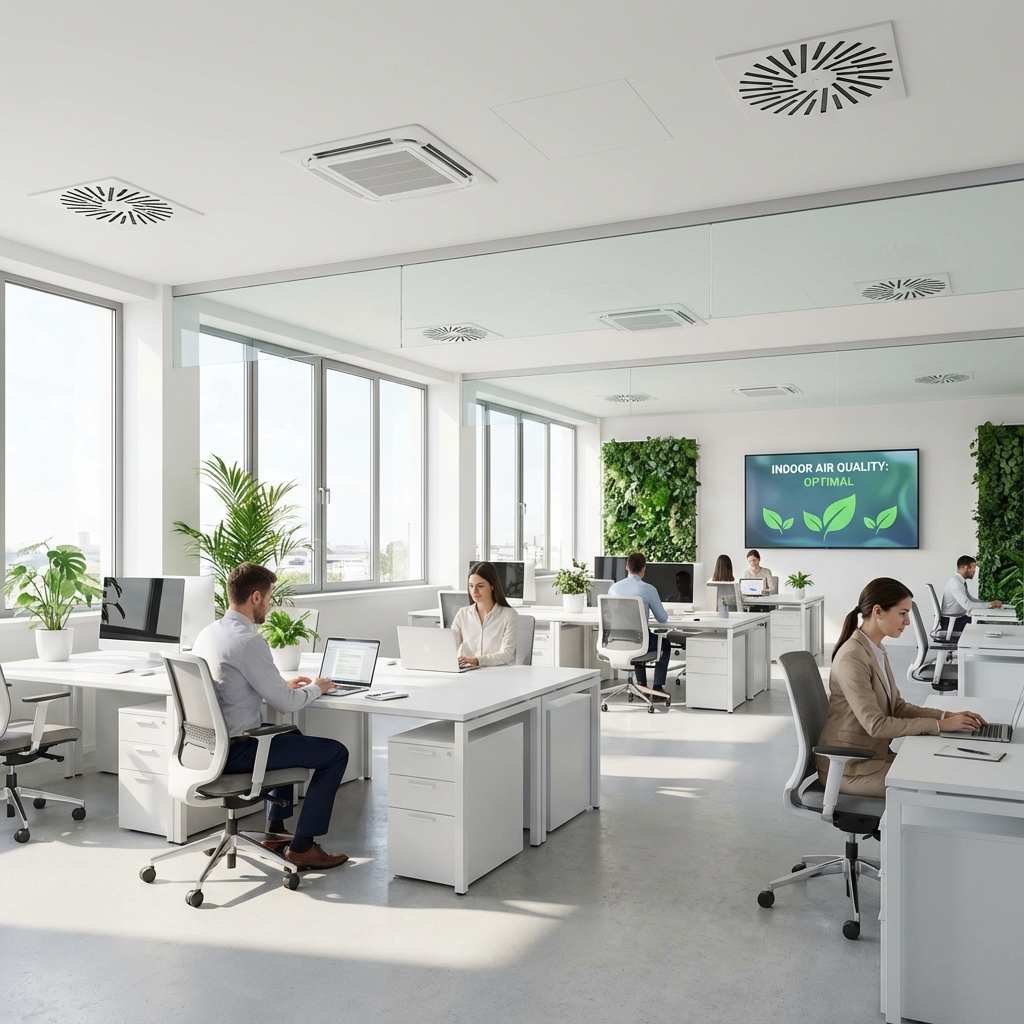
For business owners and facility managers, indoor air quality (IAQ) is far more than a comfort issue—it's a critical factor affecting employee health, productivity, customer satisfaction, and operational costs. Yet many businesses overlook this essential aspect of workplace management until problems arise.
The Business Case for Better Indoor Air Quality
Research consistently demonstrates that indoor air quality has a measurable impact on business performance. Consider these compelling statistics:
- Enhanced Productivity: Studies by Harvard University and Lawrence Berkeley National Laboratory found that improved ventilation and reduced indoor pollutants can increase worker productivity by 8-11%.
- Reduced Absenteeism: The EPA estimates that poor IAQ contributes to approximately $60 billion in annual productivity losses due to employee sick days.
- Energy Cost Savings: Clean HVAC systems operate more efficiently, potentially reducing energy consumption by 5-15%.
- Extended Equipment Life: Regular maintenance of ventilation systems extends the useful life of costly HVAC equipment.
- Improved Customer Experience: For retail, hospitality, and service businesses, air quality directly impacts customer comfort and perception.
Common Indoor Air Quality Issues in Commercial Buildings
Commercial properties face unique air quality challenges due to their size, occupancy patterns, and mechanical systems. The most common issues include:
1. Ventilation Inadequacies
Many commercial buildings—particularly older structures—suffer from insufficient fresh air exchange. Modern energy conservation measures sometimes exacerbate this problem by tightly sealing buildings without adequately addressing ventilation needs.
2. Duct Contamination
Over time, commercial air ducts accumulate dust, allergens, mold spores, and other contaminants. When HVAC systems operate, these particles circulate throughout the building. Regular commercial air duct cleaning is essential for removing these pollutants.
3. Moisture and Mold Issues
Commercial HVAC systems generate significant condensation, which can lead to moisture accumulation and mold growth if not properly managed. This is particularly problematic in humid climates or buildings with water damage history.
Signs Your Commercial Building Has Air Quality Problems
Watch for these warning indicators that your facility may need air quality attention:
- Pattern of employee complaints about headaches, fatigue, or respiratory irritation
- Visible dust around air vents or on surfaces shortly after cleaning
- Uneven temperatures throughout your facility
- Musty or stale odors, particularly when HVAC systems first activate
- Visible moisture or water stains on ceiling tiles or walls
- Excessive dust buildup in server rooms or on electronic equipment
- Higher than expected utility bills despite normal usage patterns
Comprehensive Solutions for Commercial Air Quality Improvement
Enhancing commercial indoor air quality requires a multi-faceted approach:
1. Professional Air Duct Cleaning
Commercial air duct cleaning removes accumulated contaminants from your HVAC distribution system, preventing them from circulating throughout your facility. Our commercial cleaning process uses negative air pressure technology and specialized equipment to thoroughly clean even the largest commercial systems.
2. HVAC System Upgrades and Maintenance
Regular HVAC maintenance ensures proper operation and prevents issues like microbial growth and system inefficiency. Consider installing higher-efficiency filtration systems, regular filter replacement schedules, and cleaning of coils, drain pans, and other HVAC components.
3. Advanced Filtration Solutions
Commercial electrostatic filter systems offer significant advantages over traditional filters. These systems capture particles as small as 0.3 microns, are washable and reusable, maintain airflow while providing superior filtration, and offer lower lifetime costs.
The Cost-Benefit Analysis
When evaluating the investment in commercial air quality improvements, consider both direct and indirect returns. Most businesses find that the combined benefits far outweigh the investment costs of comprehensive air quality improvements.
Every business is unique, and air quality solutions should be tailored to your specific needs, building characteristics, and budget. Contact Pure Air California today to discuss how we can help your business achieve optimal indoor air quality.
Ready to Take Action?
Boost productivity and reduce liability with commercial duct cleaning.
Commercial Air Quality Specialist
Air Quality SpecialistAuthor and air quality specialist for Pure Air California, providing expert insights on keeping Los Angeles homes and businesses clean and safe.