
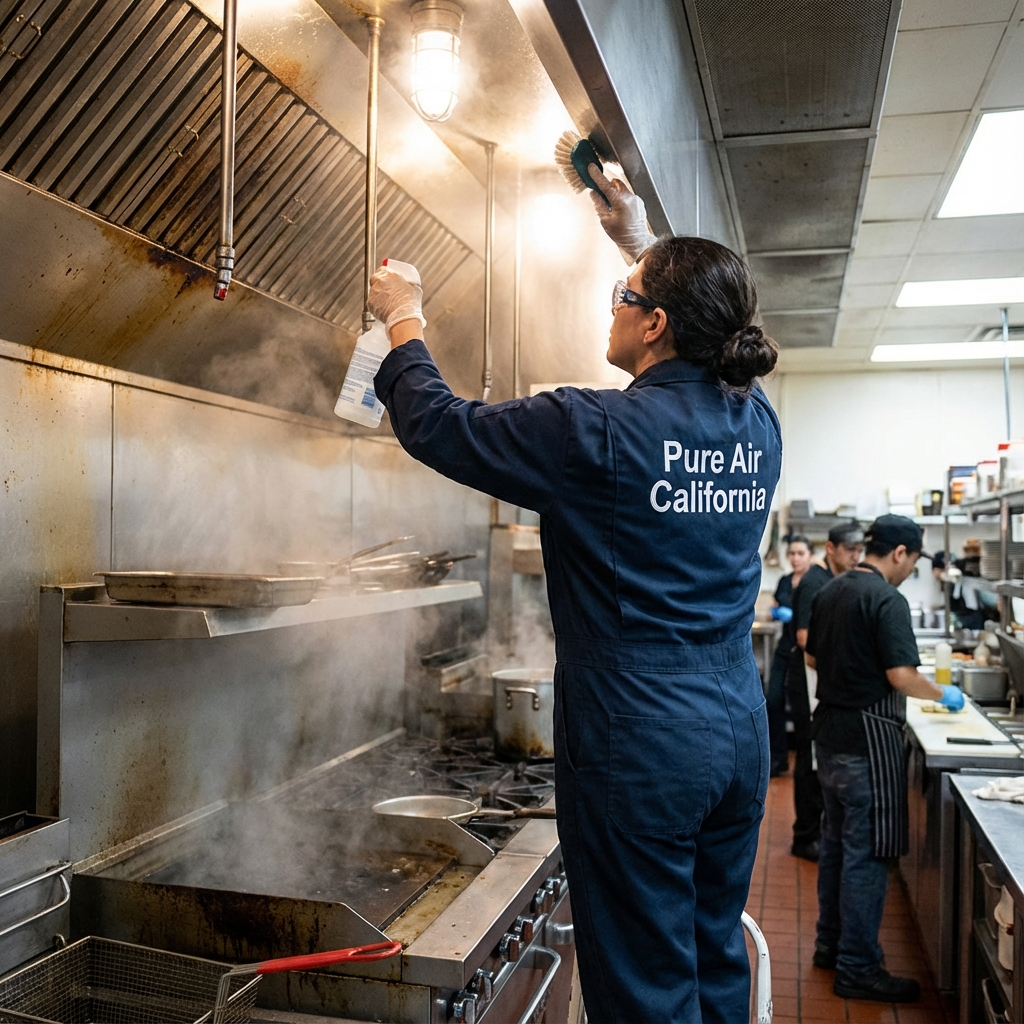
Los Angeles is one of America's premier dining destinations, with over 27,000 restaurants serving diverse cuisines from around the world. But behind every great meal is a kitchen where grease, smoke, and food particles can accumulate in ventilation systems, creating both fire hazards and health code violations.
The Restaurant Ventilation Challenge
Commercial kitchens generate far more airborne contaminants than any other indoor environment:
- Grease vapor: Cooking fat becomes airborne and coats duct surfaces
- Smoke particles: From grilling, roasting, and high-heat cooking
- Food particles: Fine debris from food preparation and cooking
- Humidity: Steam from cooking creates moisture that combines with grease
- Odors: Cooking smells that can permeate dining areas if not properly exhausted
Fire Hazard: LA's Hidden Restaurant Risk
Grease accumulation in kitchen exhaust systems is a leading cause of restaurant fires. According to NFPA:
- Cooking equipment is involved in 61% of restaurant fires
- Failure to clean is a factor in 22% of restaurant fires
- Grease buildup in ducts and hoods allows fires to spread rapidly to other areas
- A single restaurant fire averages $23,000 in damage—not counting business interruption
The Los Angeles Fire Department requires regular cleaning of commercial kitchen exhaust systems, with frequency based on cooking volume and type.
Health Department Requirements
The Los Angeles County Department of Public Health inspects restaurants for proper ventilation maintenance:
- Hood and duct cleanliness: Visible grease accumulation is a violation
- Proper airflow: Exhaust systems must effectively remove smoke and steam
- Filter maintenance: Grease filters must be clean and in good condition
- Documentation: Records of professional cleaning may be requested
A failed health inspection can result in closure, fines, and devastating negative publicity on platforms like Yelp.
Cleaning Frequency Requirements
NFPA 96 establishes minimum cleaning frequencies based on cooking operations:
- Monthly: High-volume cooking (24-hour operations, charbroiling, wok cooking)
- Quarterly: Moderate-volume cooking (most full-service restaurants)
- Semi-Annually: Low-volume cooking (churches, day camps, seasonal operations)
- Annually: Systems serving ovens only (no frying or grilling)
What Professional Restaurant Duct Cleaning Includes
Our restaurant ventilation cleaning service covers:
- Exhaust Hoods: Complete degreasing of hood interior, including plenums and light fixtures
- Ductwork: Cleaning entire duct run from hood to rooftop fan
- Exhaust Fans: Blade, housing, and motor cleaning
- Grease Filters: Cleaning or replacement as needed
- Access Panels: All panels opened and cleaned, properly resealed after service
- Rooftop Equipment: Fan and discharge area cleaning
Beyond Kitchen Exhaust: Restaurant HVAC
Don't forget your restaurant's supply air ducts, which also need attention:
- Dining room comfort affects customer satisfaction and reviews
- Grease particles can contaminate supply air systems
- HVAC cleanliness impacts employee health
- Clean supply ducts reduce odors in dining areas
Insurance and Liability
Your insurance company may require documentation of regular hood and duct cleaning. After a fire:
- Insurers will investigate maintenance records
- Claims may be denied if cleaning was neglected
- Regular professional cleaning protects your coverage
Protect your restaurant, your customers, and your livelihood. Contact Pure Air California for professional kitchen exhaust and HVAC cleaning for your Los Angeles restaurant.
Ready to Take Action?
Stay NFPA 96 compliant with kitchen exhaust cleaning.
Restaurant Safety Specialist
Air Quality SpecialistAuthor and air quality specialist for Pure Air California, providing expert insights on keeping Los Angeles homes and businesses clean and safe.